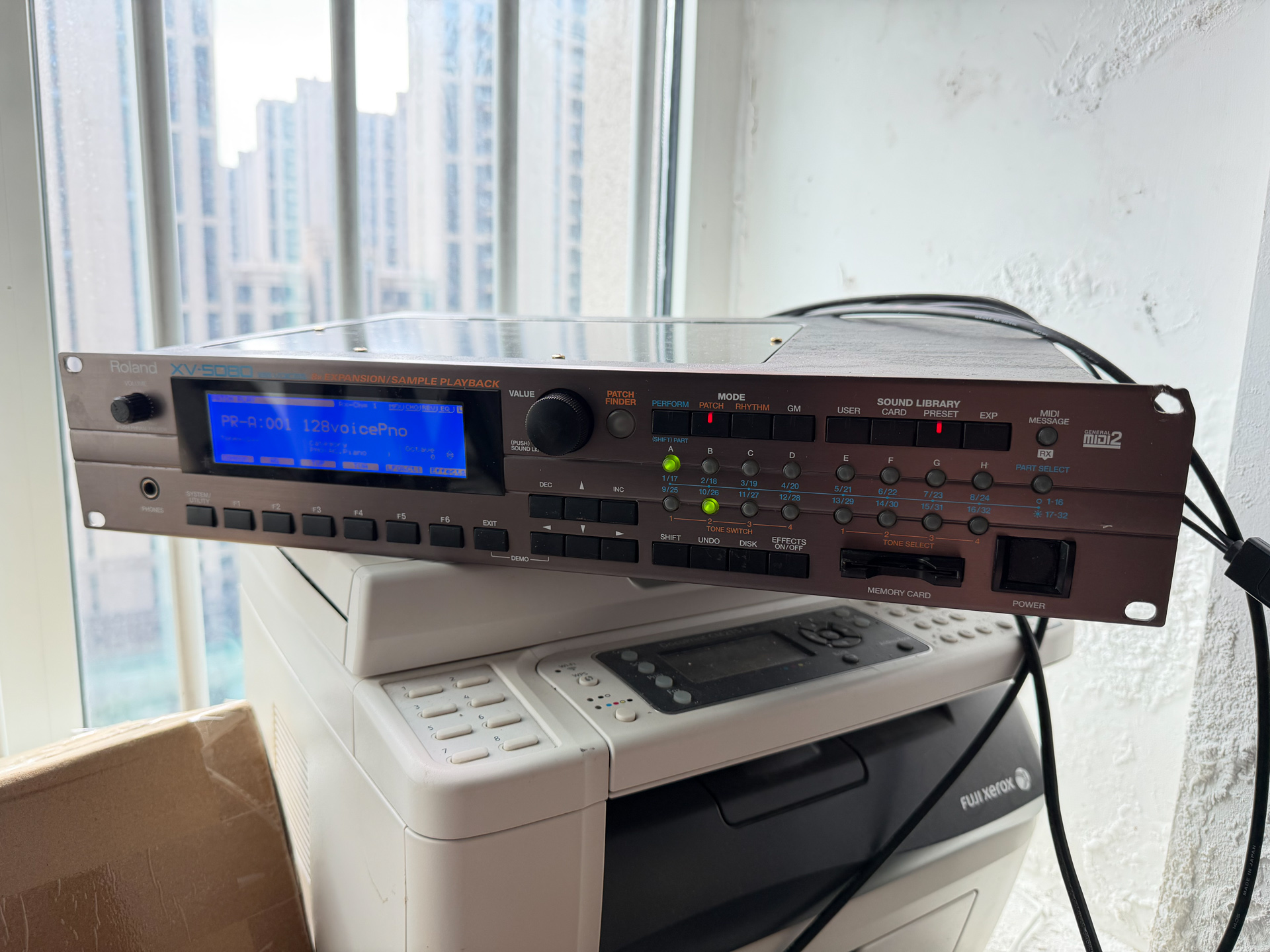
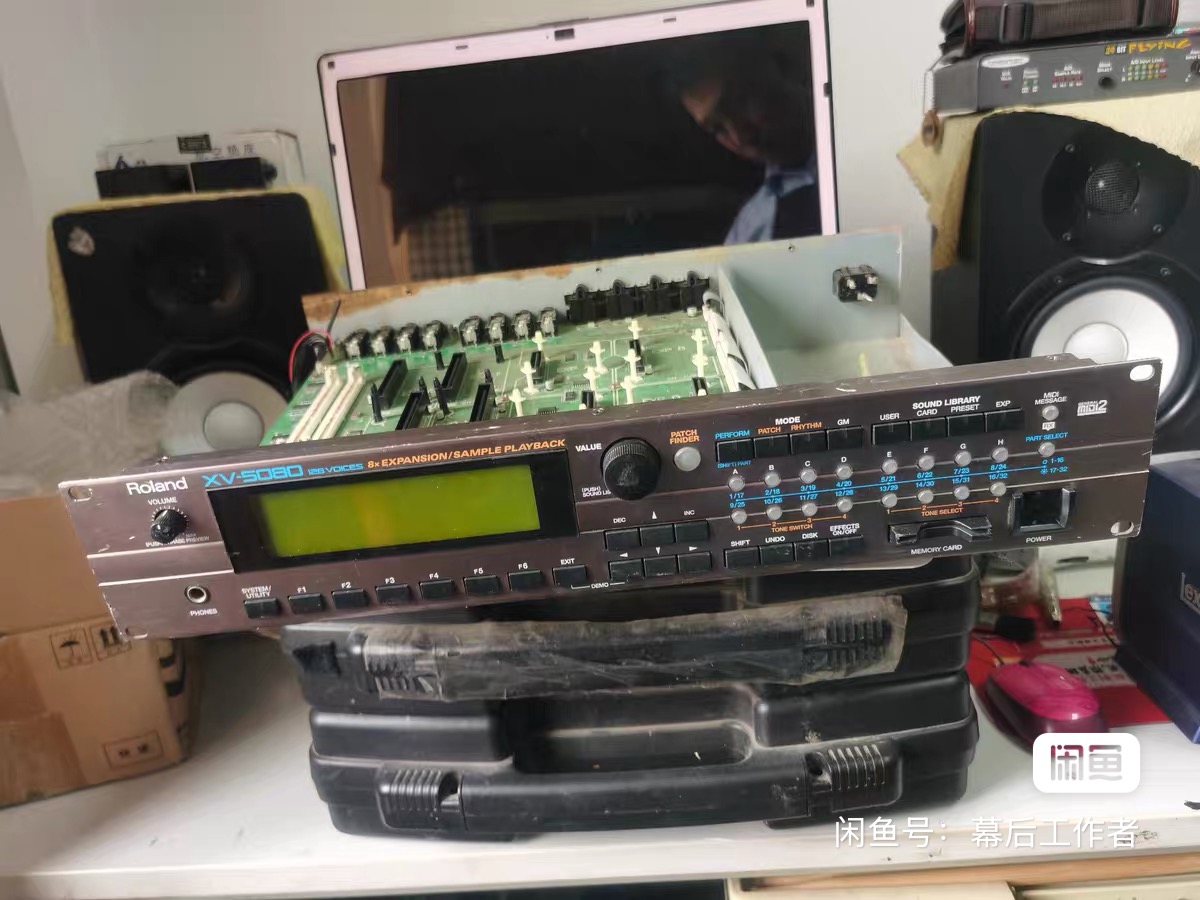
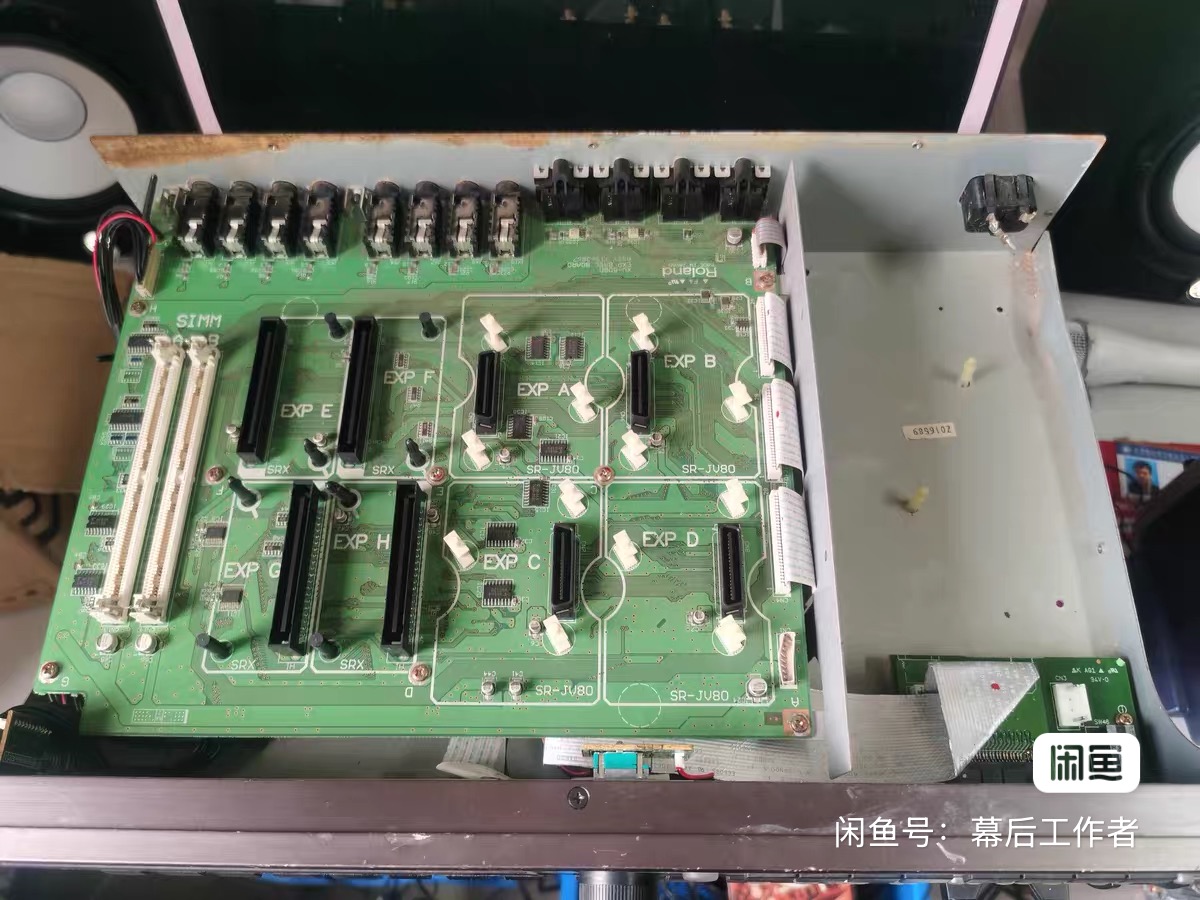
I recently acquired a XV-5080 which is for parts only for CNY 800. It’s missing power supply and has a broken screen. It’s also missing the volume knob, the power button, many screws and have a non-functional encoder pushbutton. Otherwise the unit works and the audio output is okay but have some noise.
Power Supply
GitHub repo: https://github.com/connorzheng97/xv5080-psu
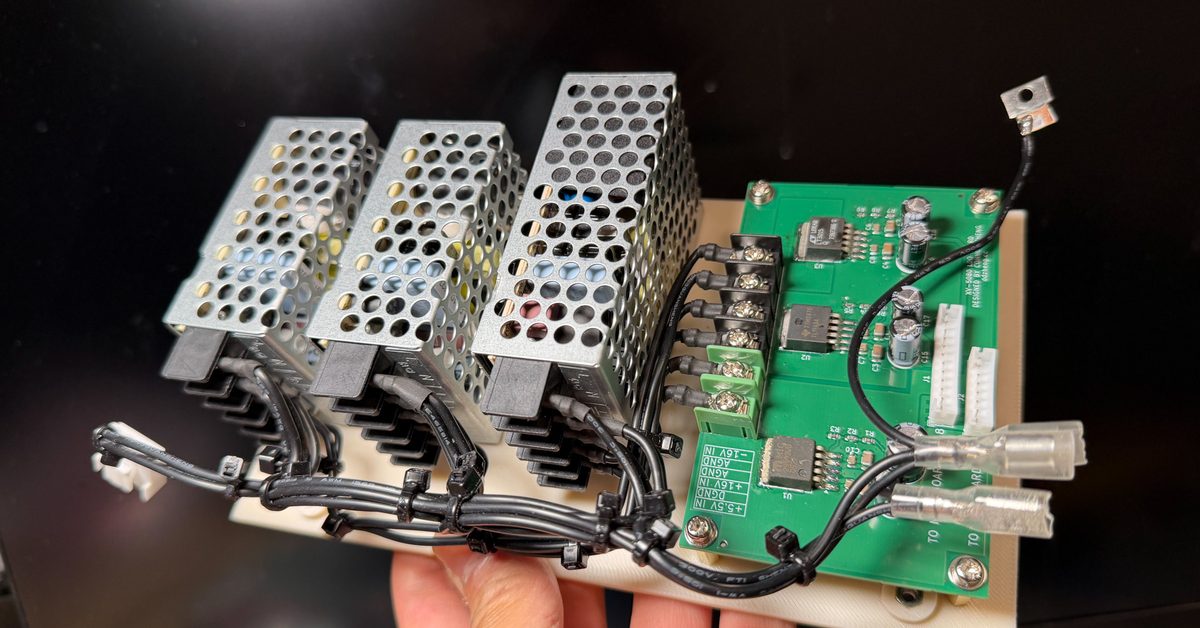
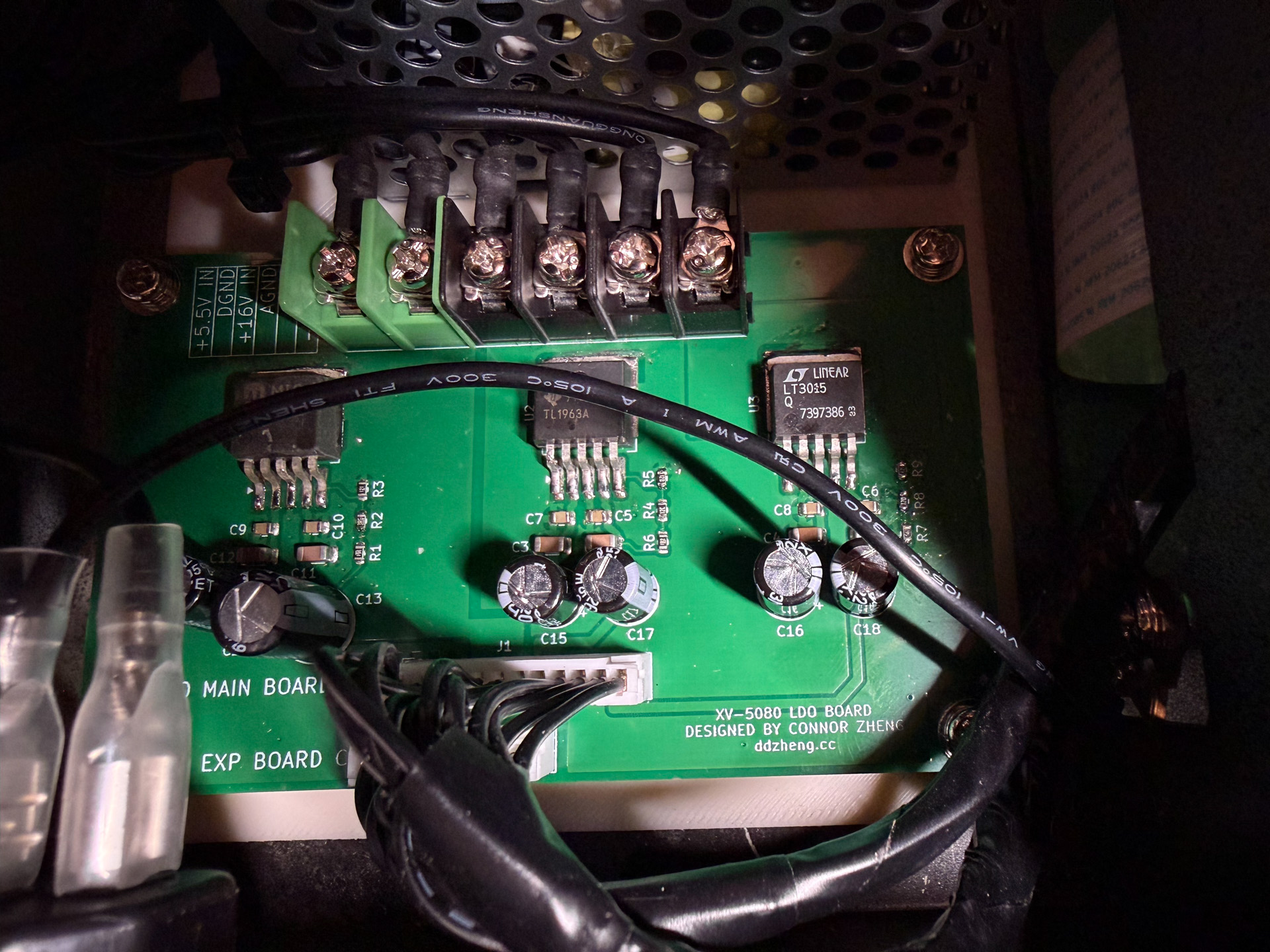
I decided to make a proper power supply using COTS SMPS and a custom LDO board. I started by designing the LDO board which sits between the SMPSs and the synthesizer. It have 3 rails: +5V, +15V and -15V. The +-15V rails are analog supplies and are isolated from digital supply +5V.
I used 3 LDOs one for each rail. MIC29502 is used for 5V, as the current is higher. This is an overkill but it ensures low dropout voltage and it can supply 4 of my SR-JV Wi-Fi card working with Wi-Fi on and still have good headroom. For analog supplies I used Linear (now Analog Devices) LDOs, the classic LT1963+LT3015 combination.
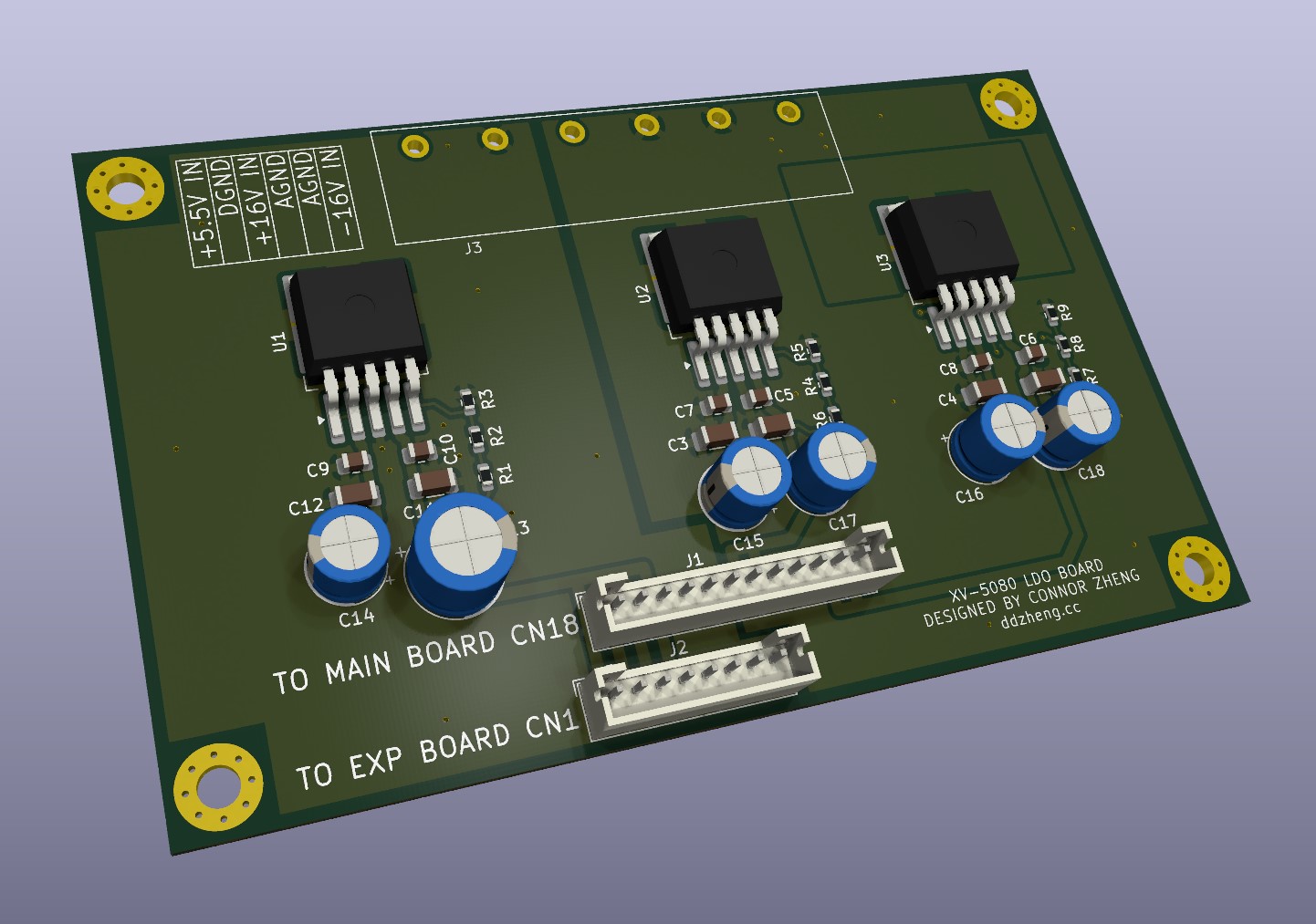
I used second-hand chips for the regulators from a reputable seller. Those are de-soldered from scrap electronics and are sold for cheap. The +15V regulator is actually TL1963 from TI not Linear.
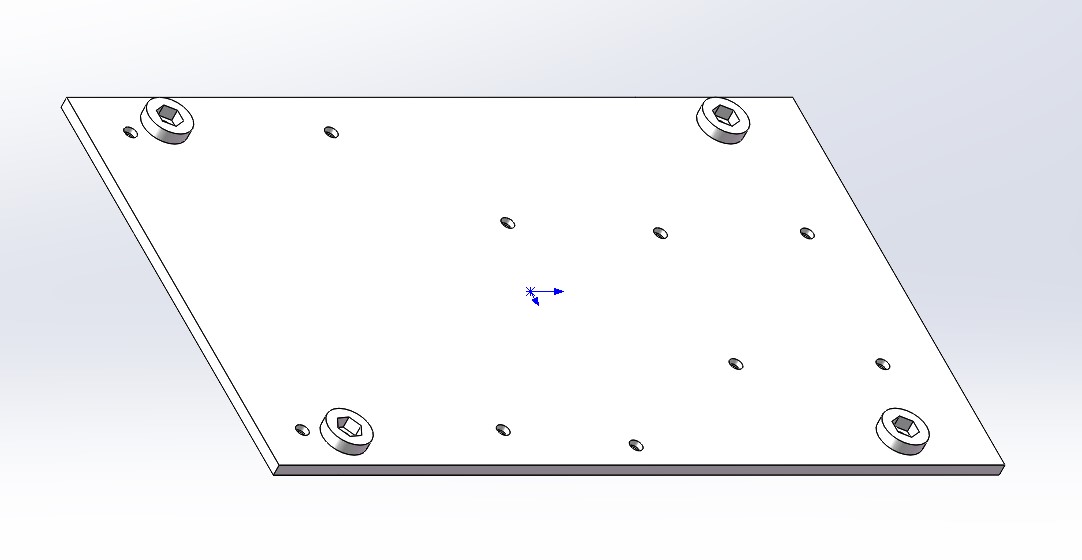
To mount the SMPS and the board I designed a chassis for the power supply parts. I 3D printed it using ASA.
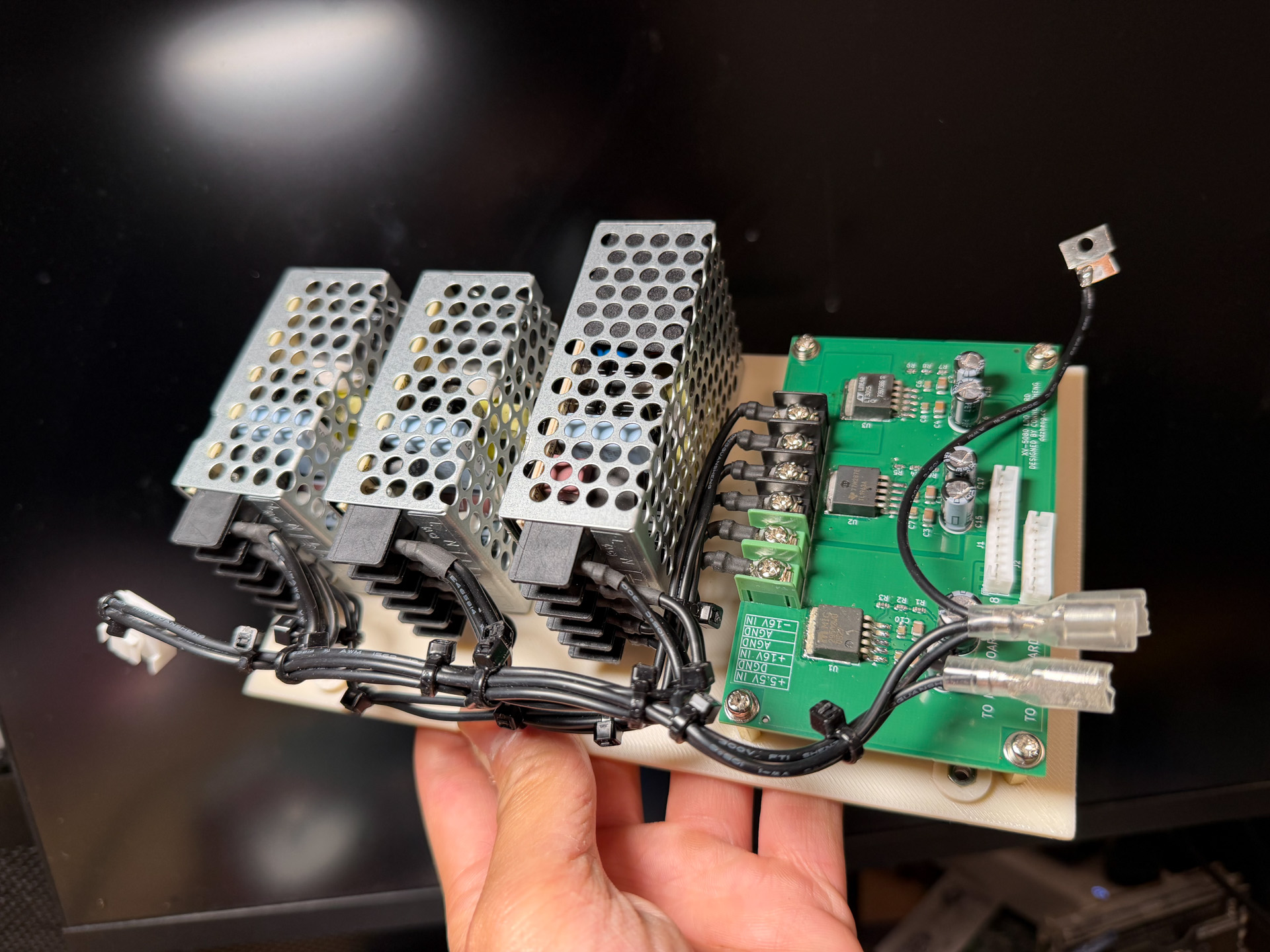
To assemble the power supply I used fork type crimp terminal (uninsulated) and 18AWG wire. To connect to the original power switch I used VH3.96 connector. I didn’t have any ring type crimp terminal left for the PE so I soldered a TO-220 tab to the PE wire and used that as a terminal.
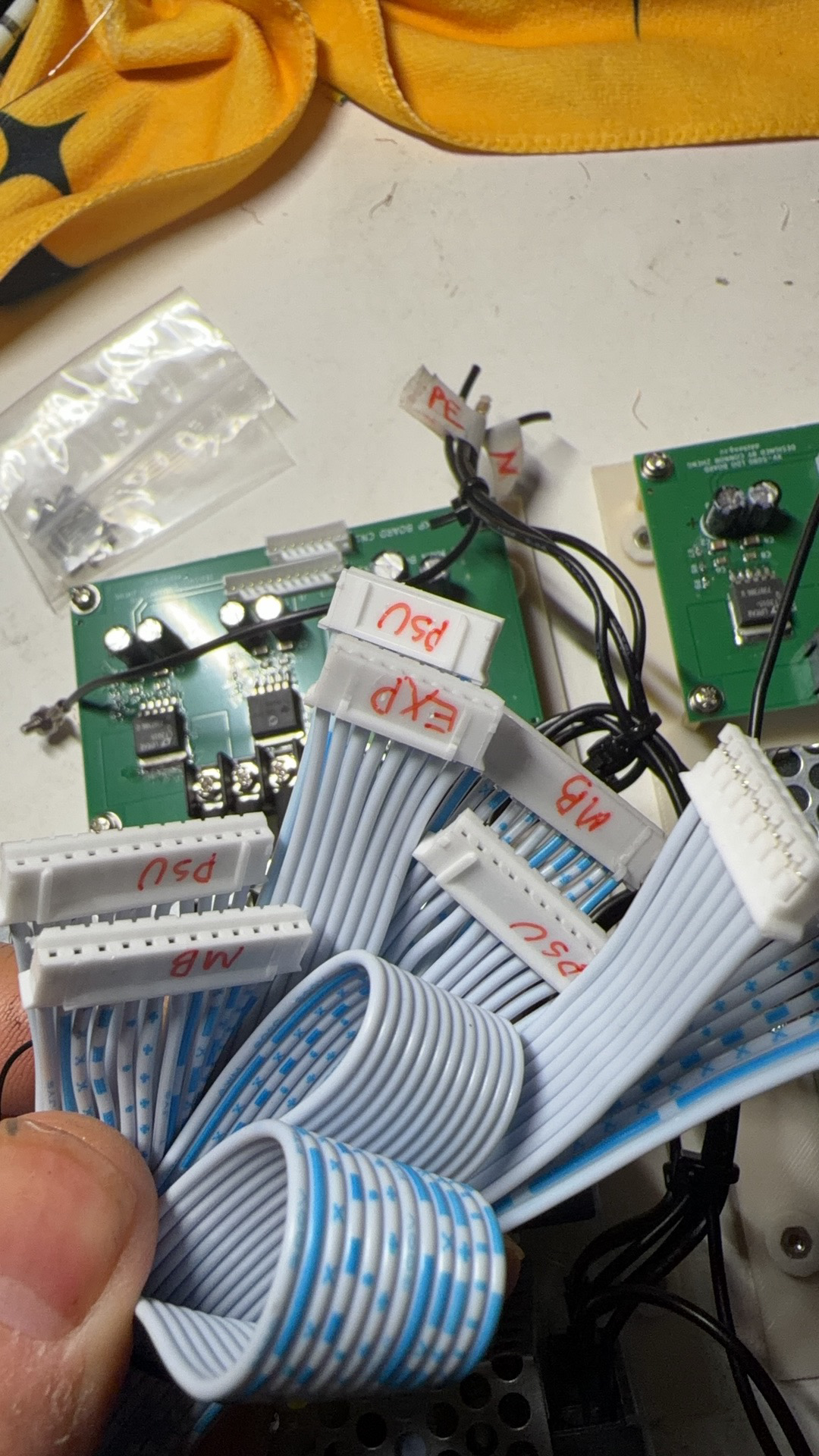
I replaced the AC input connector with SCHURTER 6100.4312 which has 6.3mm spade connection. The original power supply cable has been cut by previous repair personnel so I had to use JST PH2.0 cable. The connector on the synthesizer boards are JAM SB2.0 which are not fully compatible with PH2.0 and the friction locking tab on PH2.0 connector need to be removed.
The SMPS are adjusted to bring the voltage up to create headroom for the LDOs. I have them running at 5.75V and 16.5V. Once adjusted and tested the whole assembly can be installed in the original location, after removing the plastic standoffs which are used for the factory power supply.
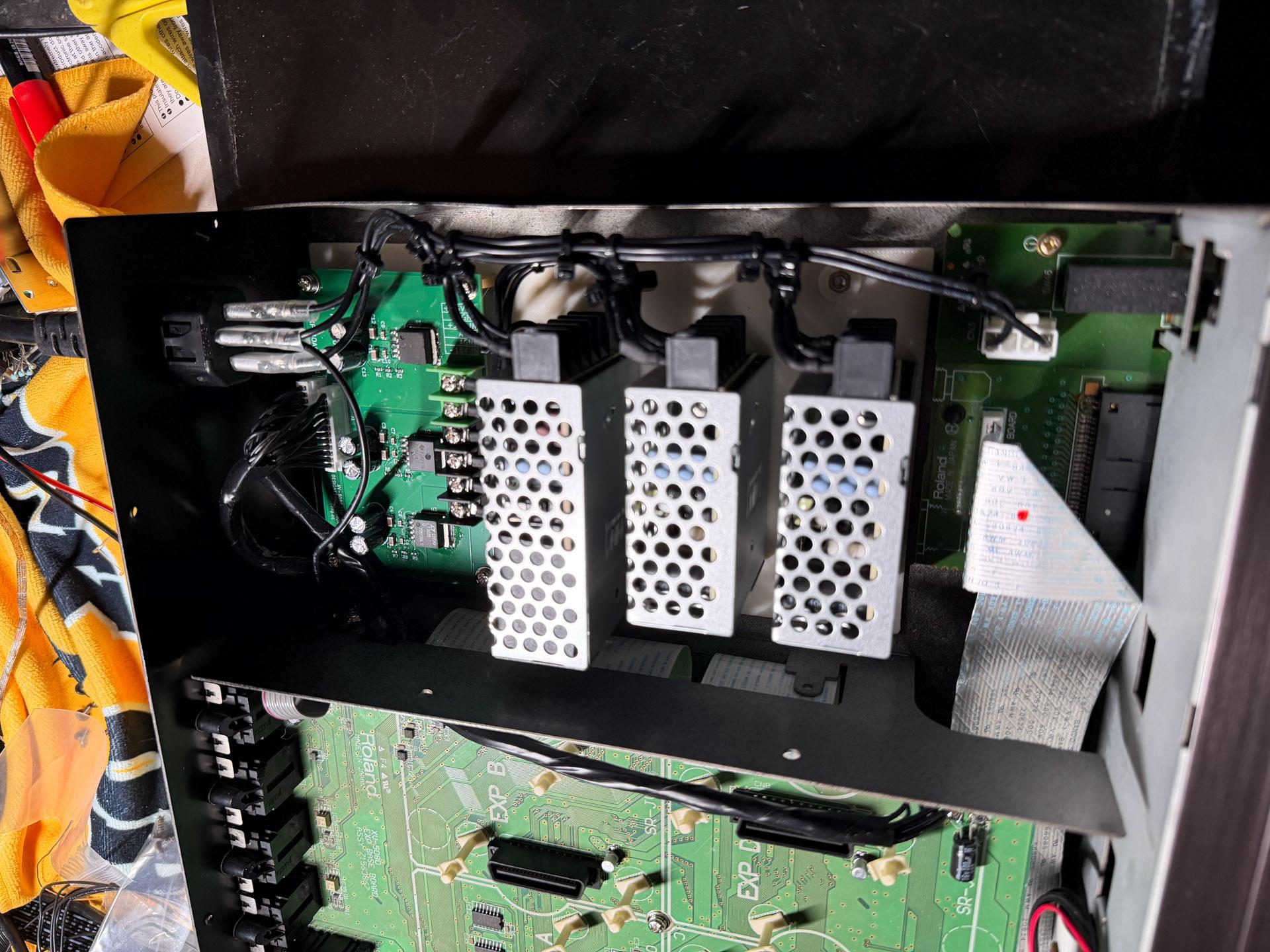
Restoration
From here on it’s all just regular restoration.
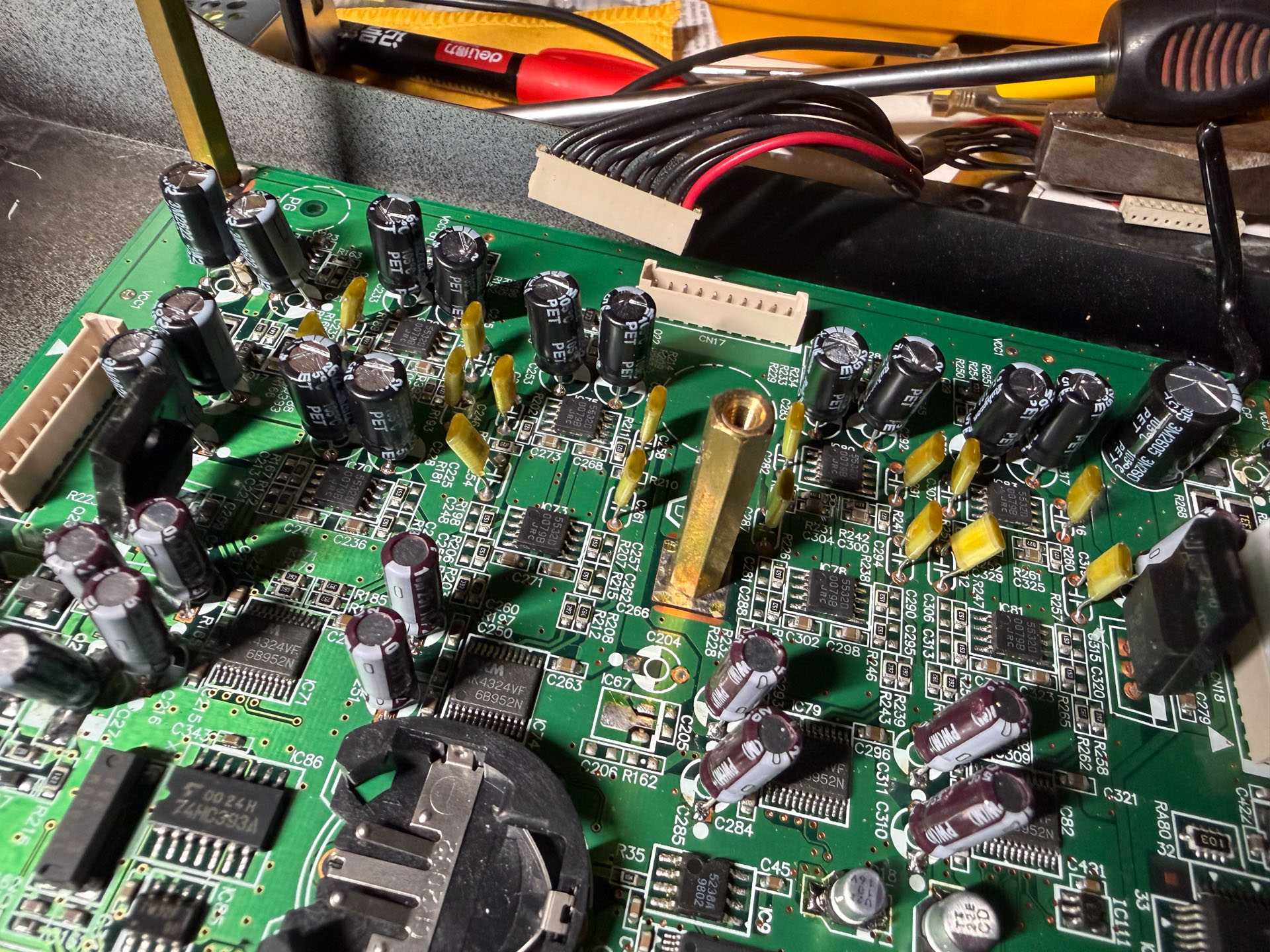
Electrolytic Capacitors
All electrolytic capacitors are replaced, using either Rubycon, Chemi-con or Nichicon ones, as I always did.
There’s a high end ELNA Silmic audio capacitor, which is used for power decoupling and this makes no sense. I replaced it with regular low ESR electrolytic. For the analog supplies I bumped all capacitor voltage to 25V from 16V which should solve the drying up issue. In some locations I used THT capacitor on SMT footprint as I have those in stock. Those are reinforced with RTV silicon rubber.
Tact Switches
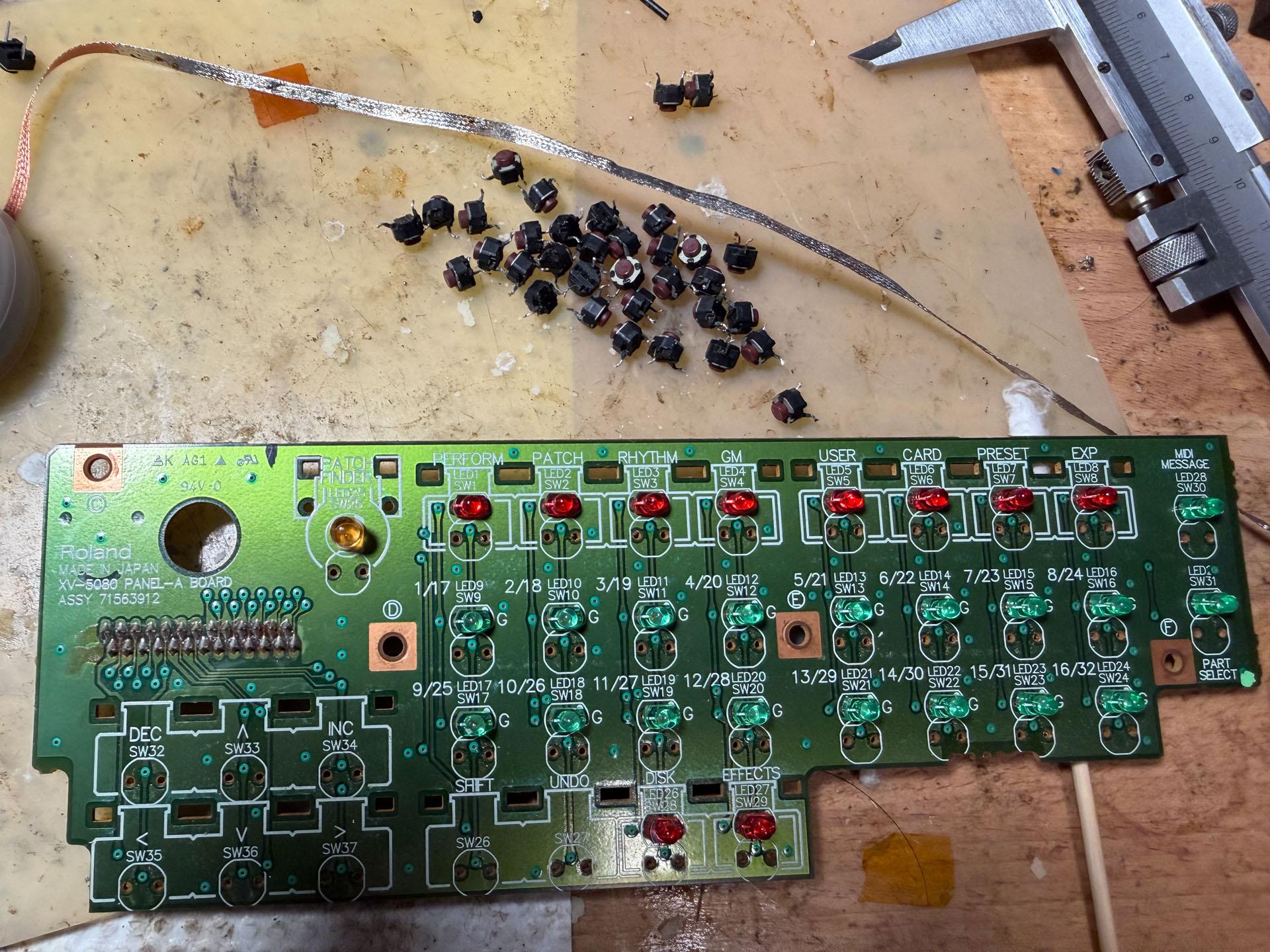
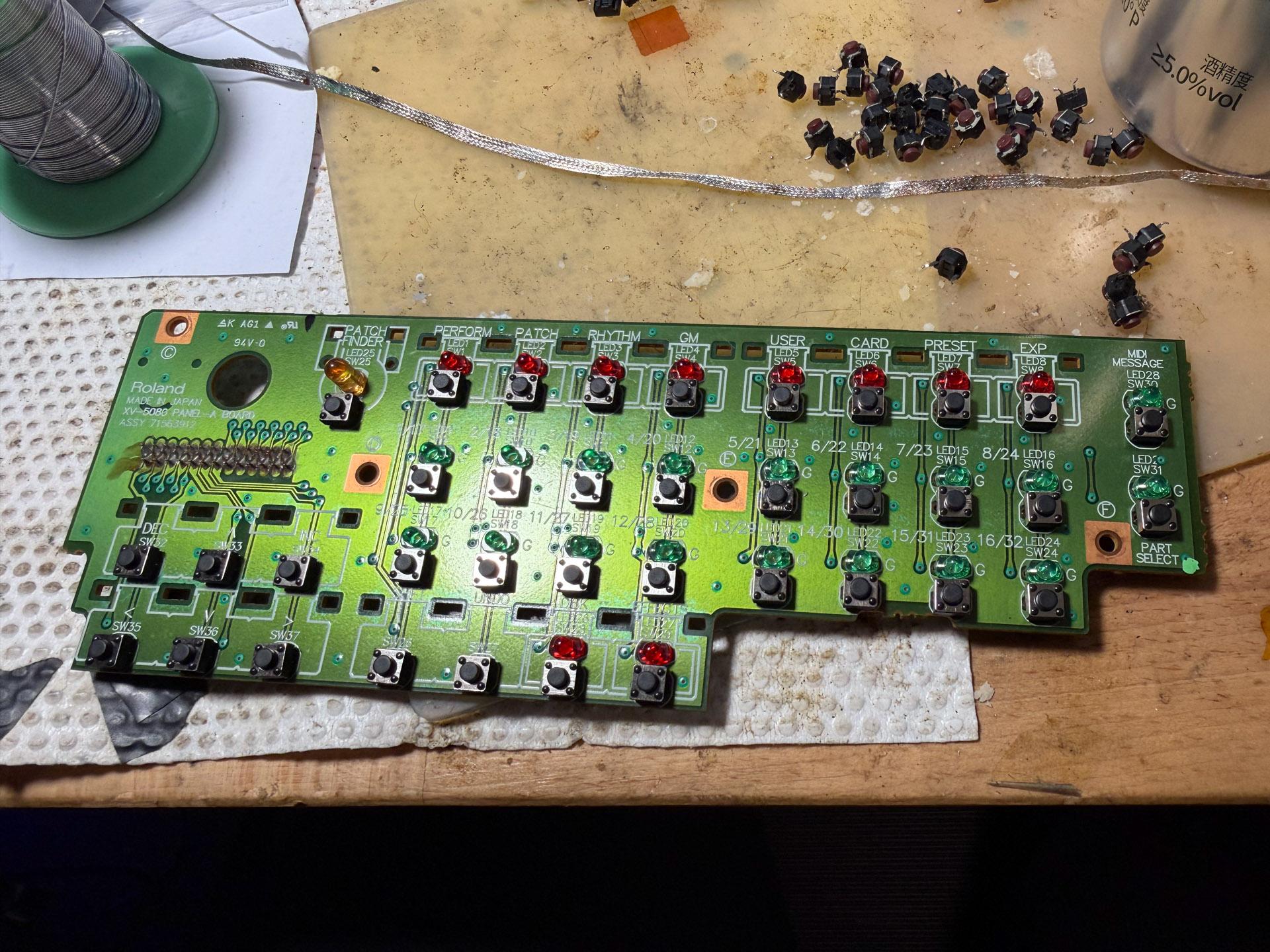
I replaced all tactile switches. Those rectangular ones can replace and are fully compatible with the original round ones.
Encoder
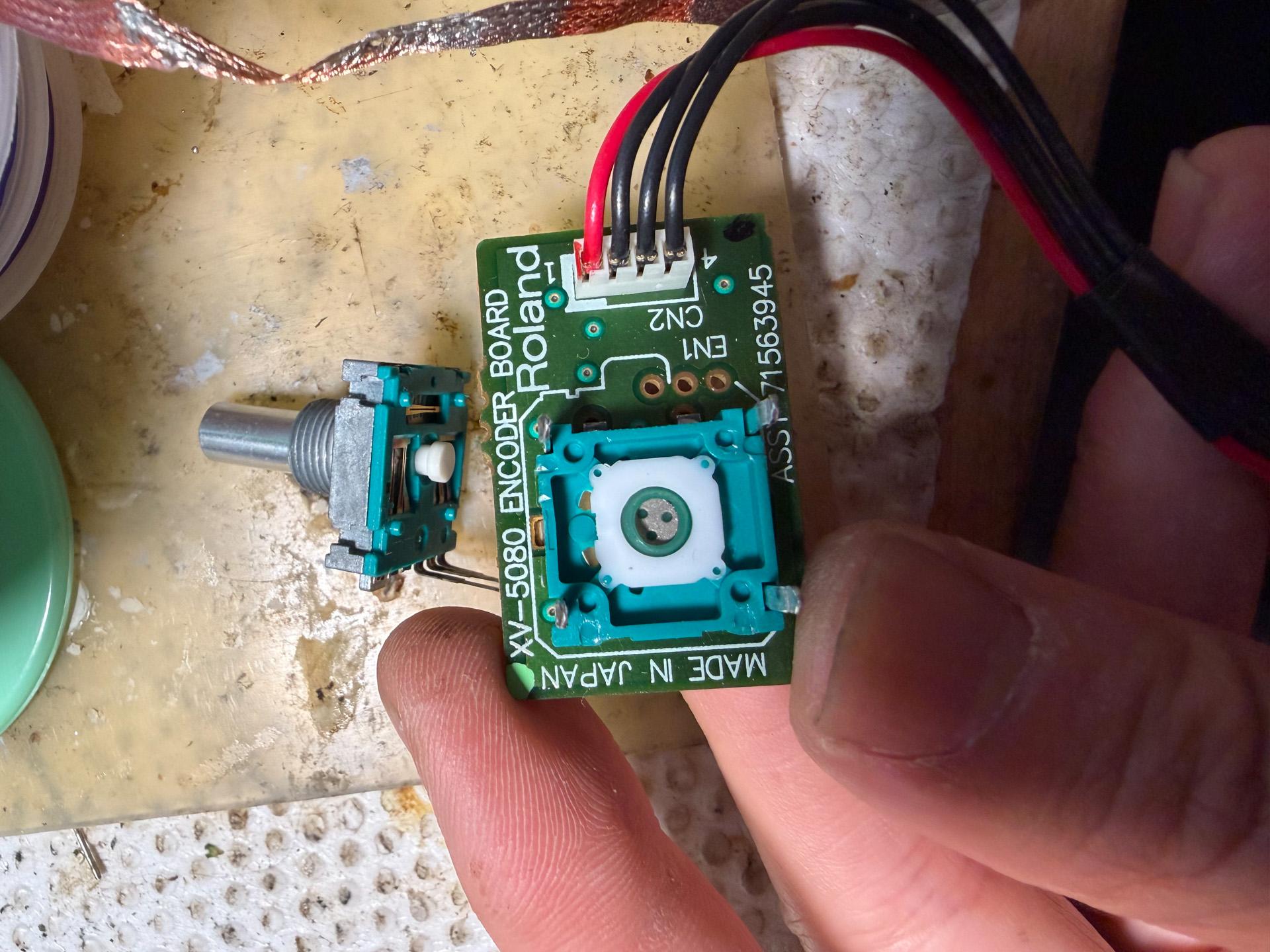
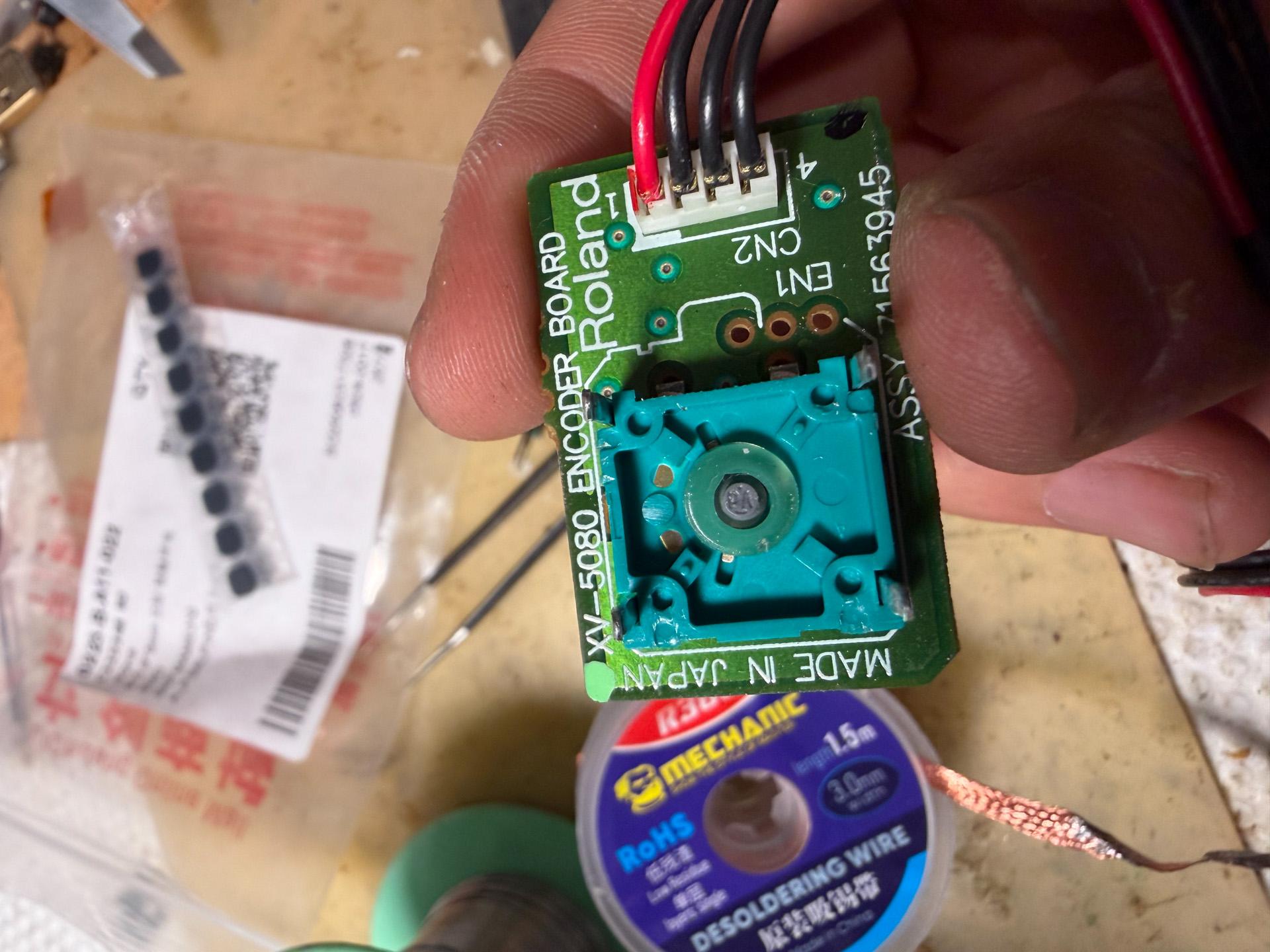
The encoder’s pushbutton is not working, so I opened it up and found that the silicone dome has broken. I don’t have a similar sized dome so I gutted an Alps SKPM switch and put the dome from the SKPM in the encoder switch. It’s smaller and have less actuation force but it works fine otherwise.
LCD Module
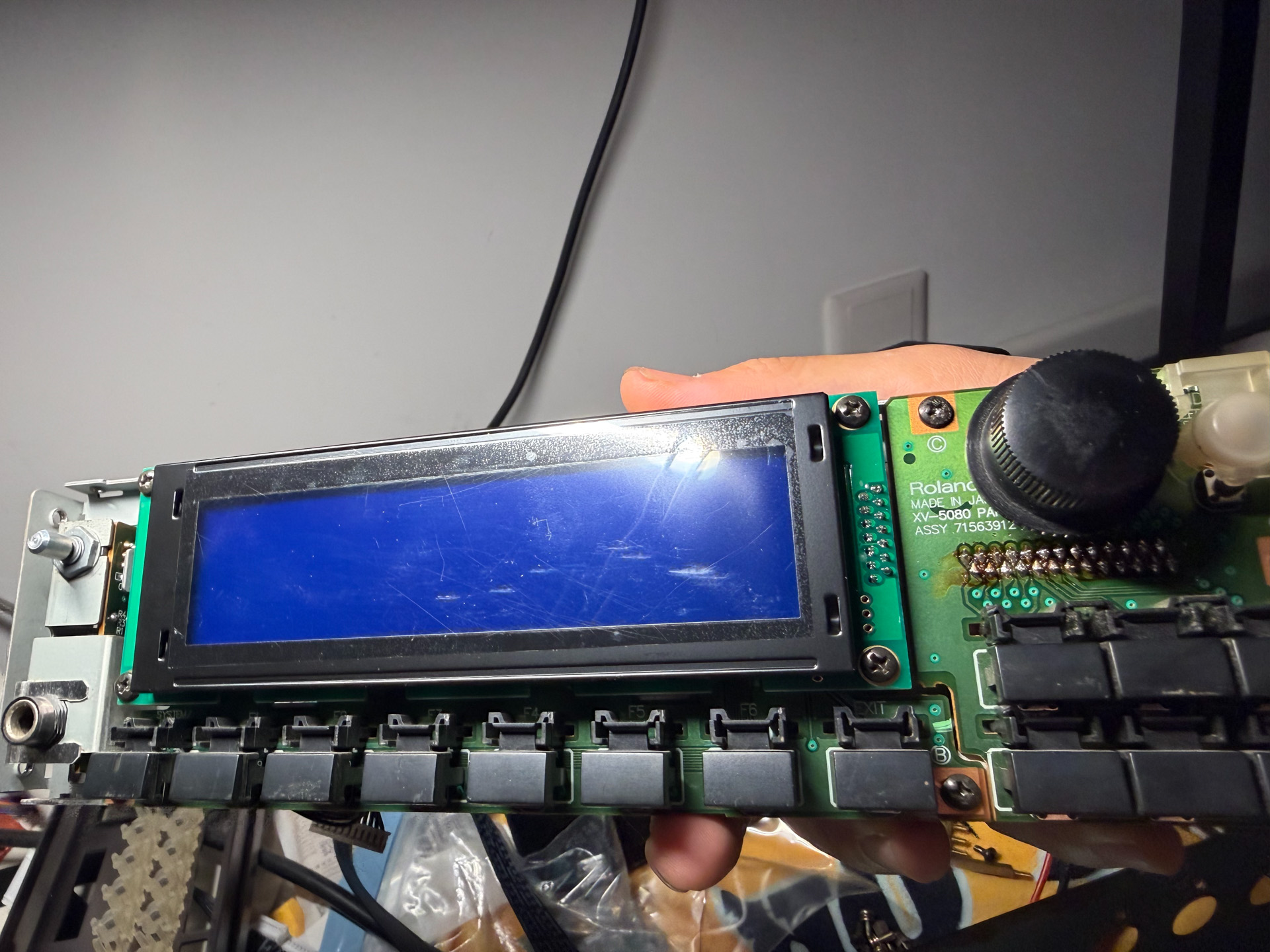
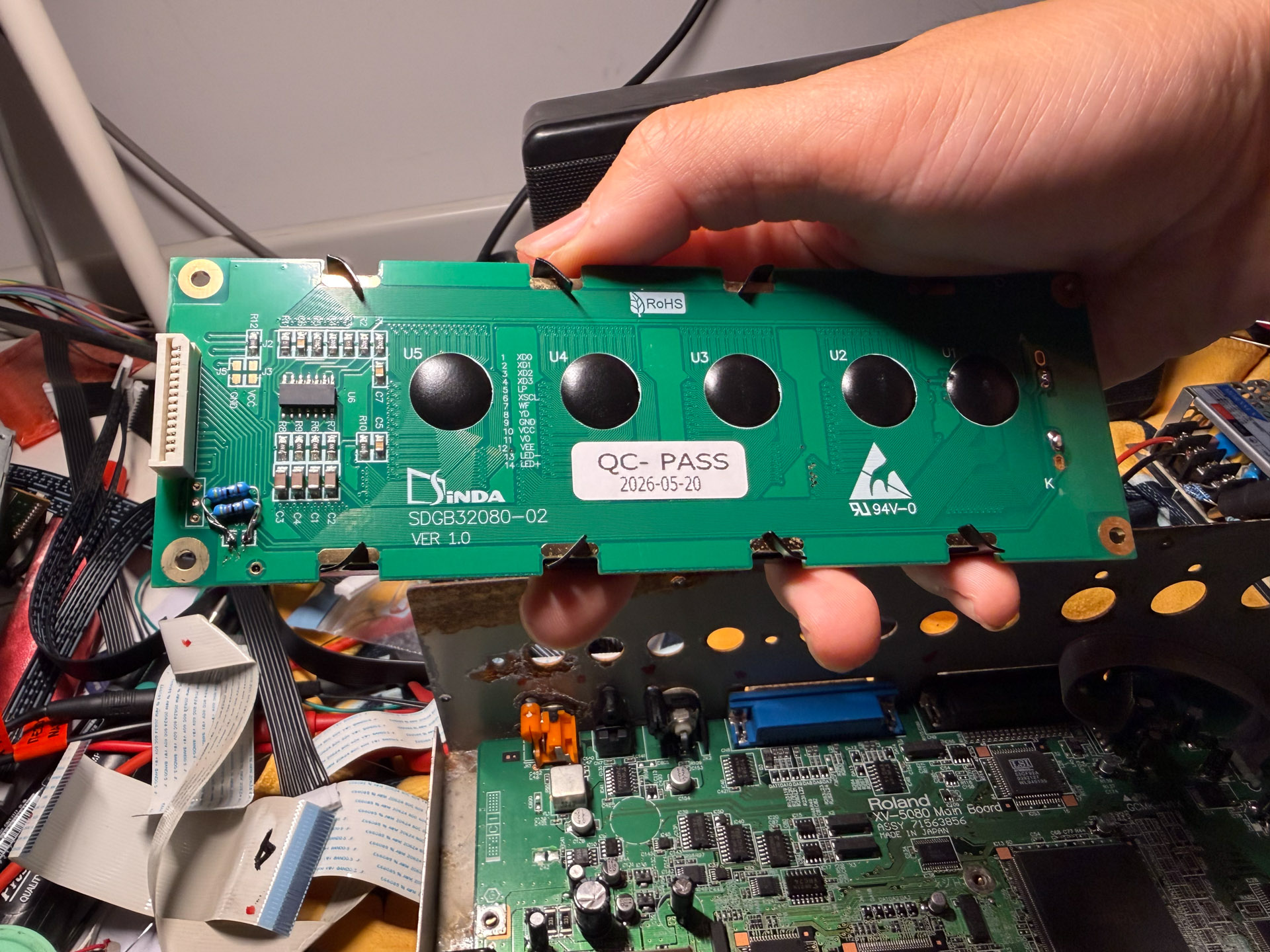
I replaced the screen with the same one I used for the XP-80. The XV-5080 is already using 5V to supply the backlight LED so it’s only necessary to modify the 0R resistor on the LCD itself that’s in series with the LED. I changed it to 2 47R in parallel.
Bodywork and Painting
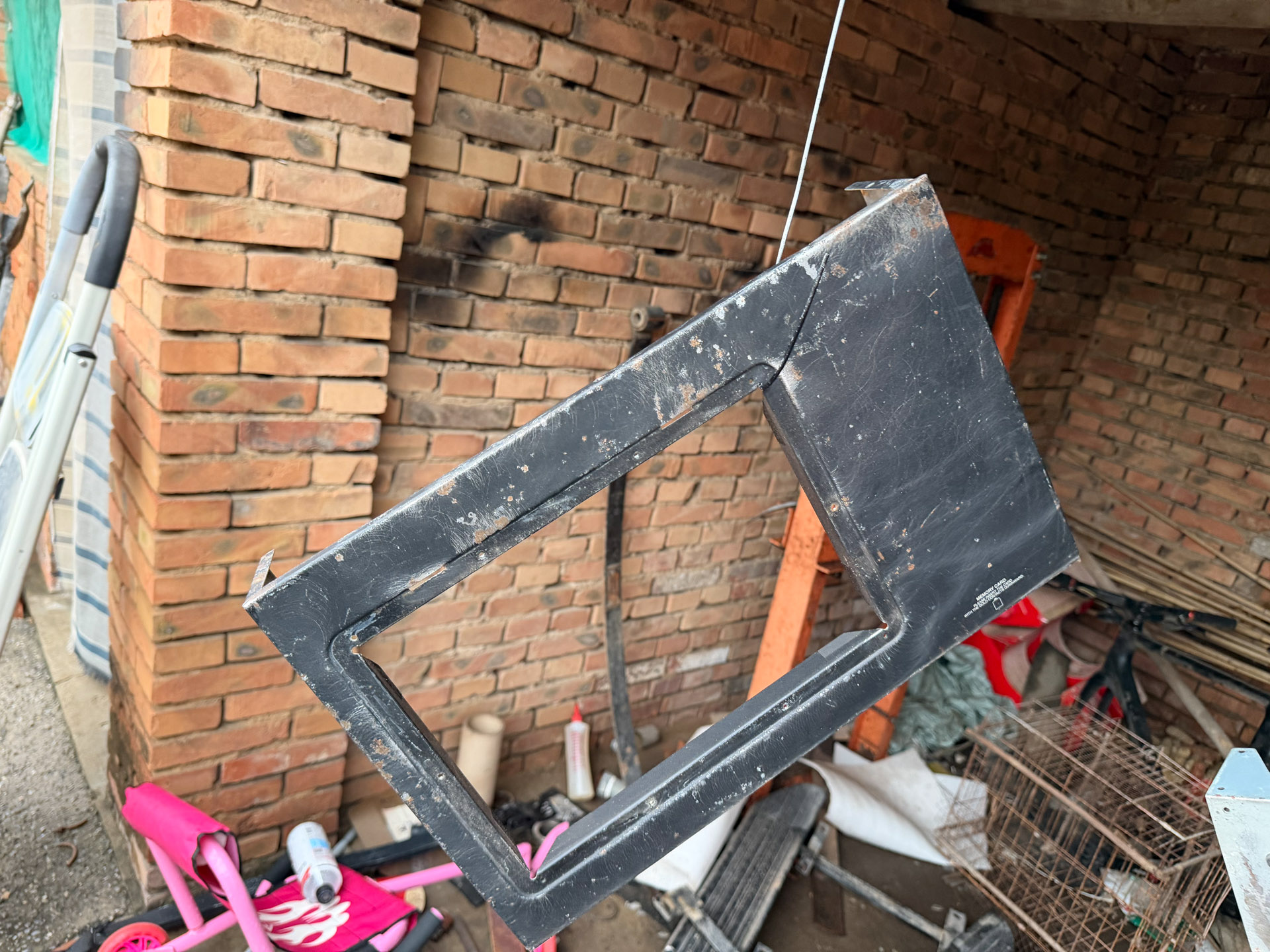
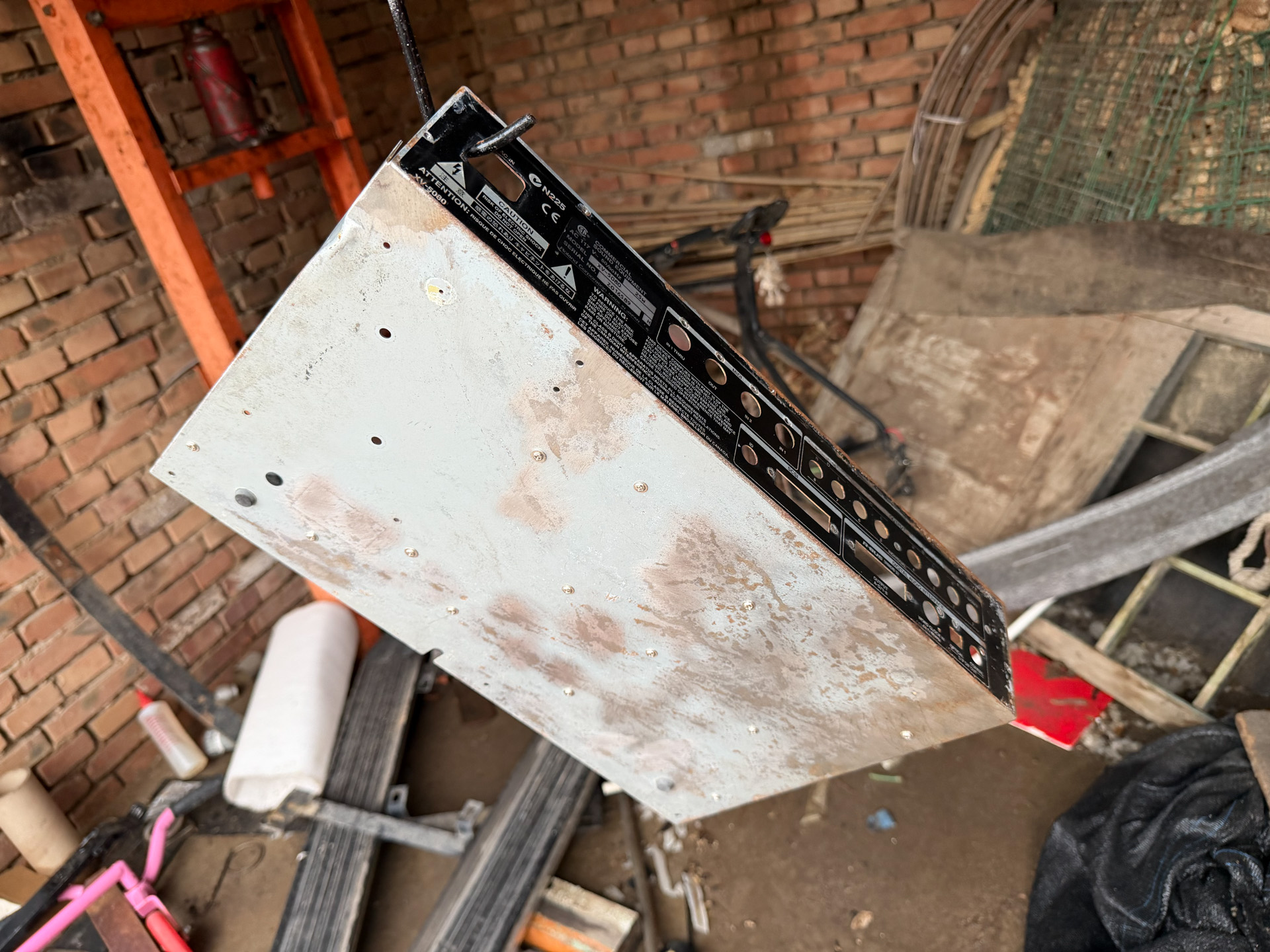
I repaired the enclosure where there’s a deep dent, and removed the rust and spray painted both parts.
Knob and Button
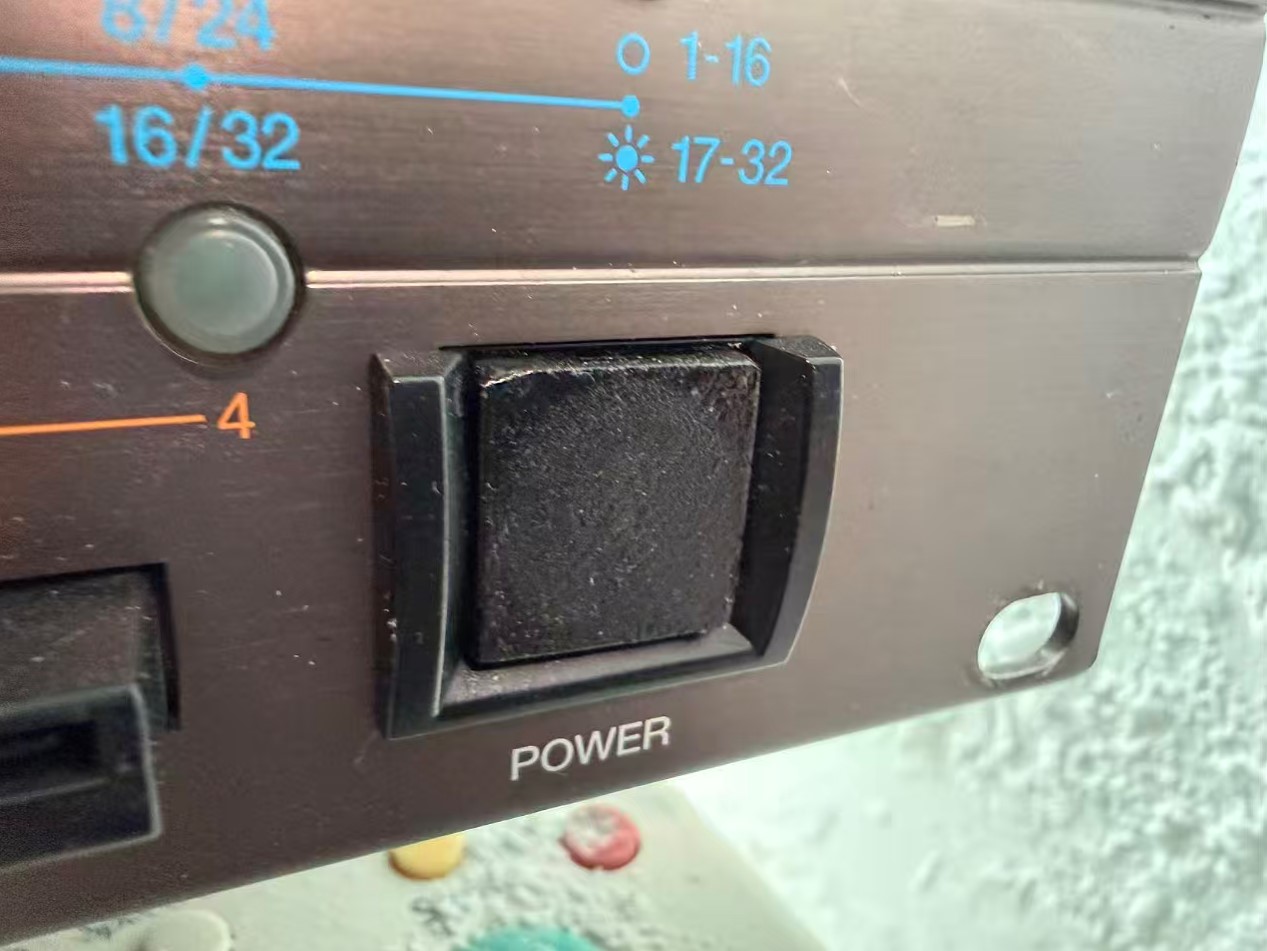
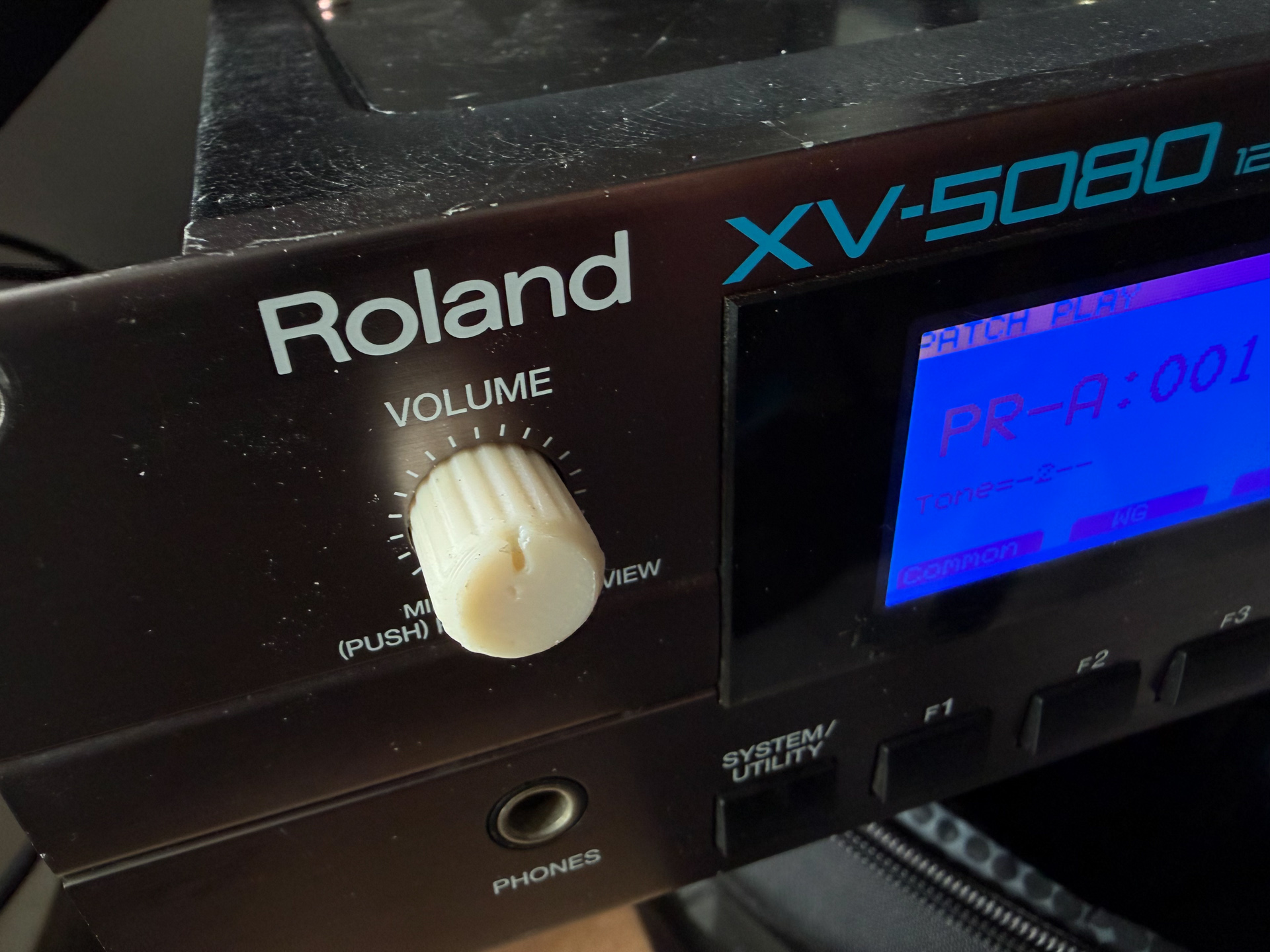
I 3D printed a volume knob and a power button and this concludes the restoration.
Finishing Up
The seller who sold this parts machine to me became interested in the power supply I made and ended up ordering 2 from me. If my understandings are correct my power supply should have lower noise than factory PSU.
You can listen to the XV-5080 demo I recorded at demoDB: https://demodb.org/roland/xv/xv-5080